Makerere Challenges PhD Students to Turn Research Into Solutions as Advanced Research Methods Training Ends
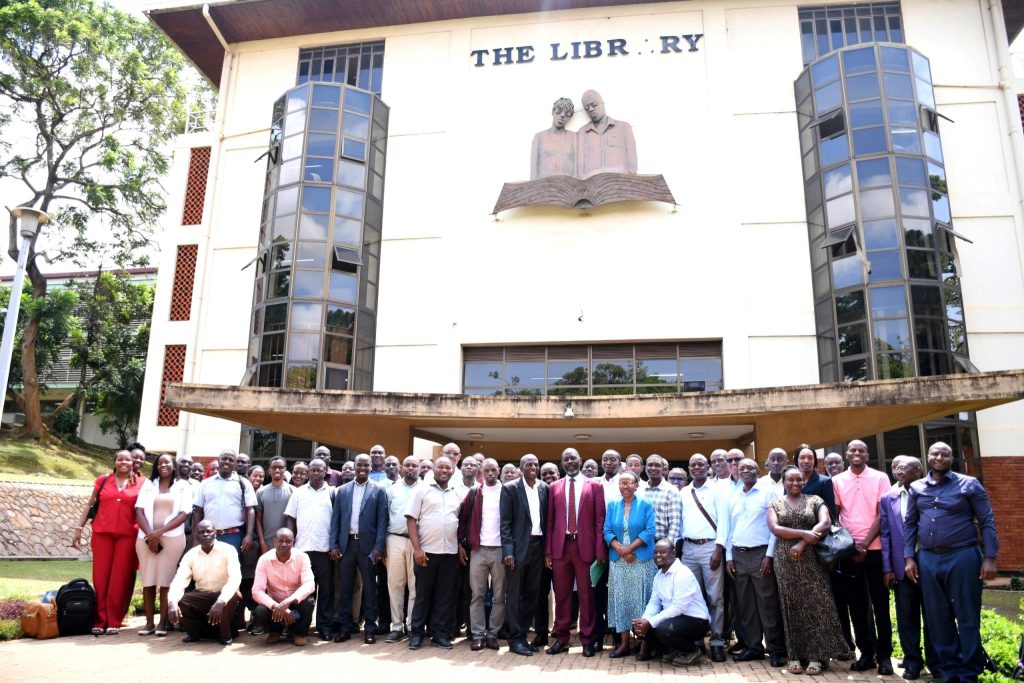
Prof. Julius Kikooma and Prof. Stella Neema pose for a group photo outside the Main Library with facilitators and PhD students after the training on 25th May 2025.
By Moses Lutaaya
The Director of Graduate Training at Makerere University, Prof. Julius Kikooma, has challenged PhD students to ensure that their research directly contributes to solving Uganda’s pressing societal challenges, saying postgraduate research must move beyond academic theory to real-world transformation.
Prof. Kikooma made the remarks on Monday, May 25, 2026, during the closure of a 10-day PhD cross-cutting training in Advanced Research Methods held at the Main Library Room 24/7 at Makerere University. The blended training, which started on May 11, attracted more than 250 PhD students physically and online from different colleges and schools across the university.
The training was organized by the Directorate of Graduate Training and supported by iCARTA as part of Makerere’s efforts to strengthen doctoral education and research capacity.
In his closing remarks, Prof. Kikooma praised the team of facilitators led by Prof. Stella Neema and Prof. Christopher Mugimu, among others for not only teaching technical research content but also mentoring students into becoming the next generation of impactful researchers.
“I think they are also mentors. They have been mentoring you into the role of the next generation of researchers,” Prof. Kikooma said, noting that the facilitators had given students a framework for thinking critically about research and understanding what the university expects from doctoral scholars.
He emphasized that Makerere University is intentional about producing graduates whose research contributes solutions rather than adding to society’s challenges.
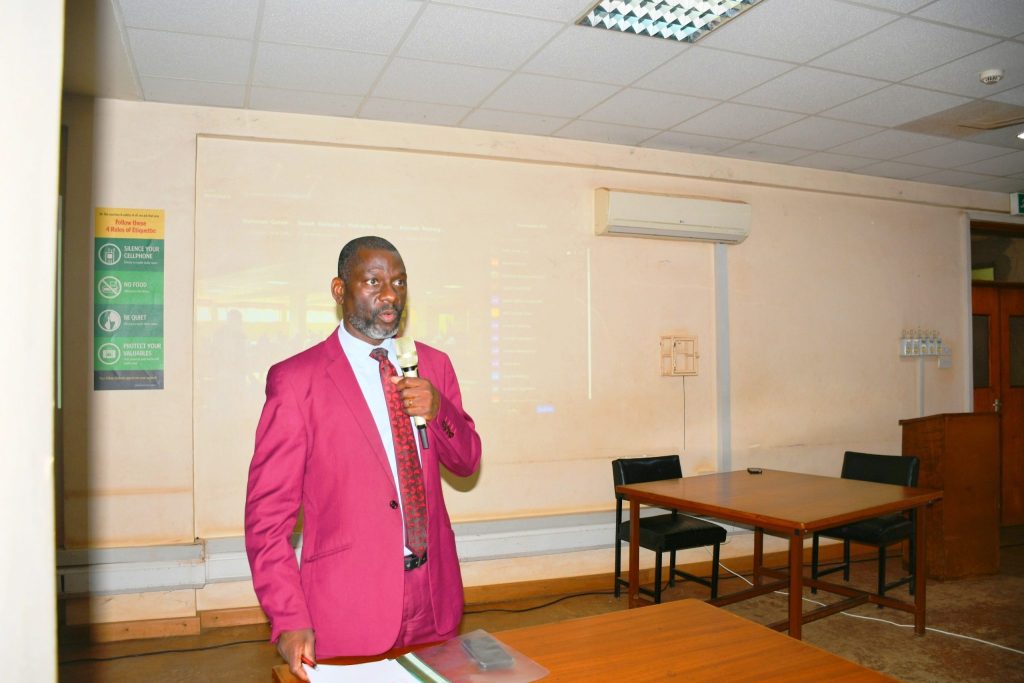
Prof. Julius Kikooma puts his challenge across to PhD students.
“What we do here should reassure the nation that the products from Makerere University are contributing to solutions. They are not adding to problems but adding to solutions,” he said.
According to Prof. Kikooma, the knowledge and tools acquired during the intensive training should not merely help students earn degrees, but should prepare them to generate insights, innovations and evidence-based solutions for communities and policymakers.
“At this point there are many things happening which still don’t have proper answers and do not have people spending sufficient time to study them. We expect your studies to become part of what the country will use to solve some of the problems,” he added.
Prof. Kikooma revealed that the Directorate of Graduate Training has adopted the theme “Postgraduate Research for Transformation,” aimed at ensuring that all doctoral research connects to broader societal needs.
“Gone are the days where you engage in research and knowledge creation for the sake of knowledge. Your work must translate into innovative solutions and insights that help policy makers make better decisions,” he said.
He further explained that the Directorate’s role goes beyond coordinating academic programmes to intentionally exposing students to cross-cutting competencies such as critical thinking, interdisciplinary, communication skills and problem-solving.
The Advanced Research Methods course is one of the mandatory PhD cross-cutting courses at Makerere University alongside Philosophy of Methods and Scholarly Writing. The courses are undertaken during the first year of the PhD journey, either in semester one or semester two.
Prof. Kikooma said the cross-cutting nature of the course is designed to help students appreciate that modern societal challenges cannot be solved through isolated disciplines.
“The issues that will lead to solutions do not come in compartments. That is why these courses are called cross-cutting,” he said.
Read full article:https://news.mak.ac.ug/2026/05/makerere-challenges-phd-students-to-turn-research-into-solutions-as-advanced-research-methods-training-ends/